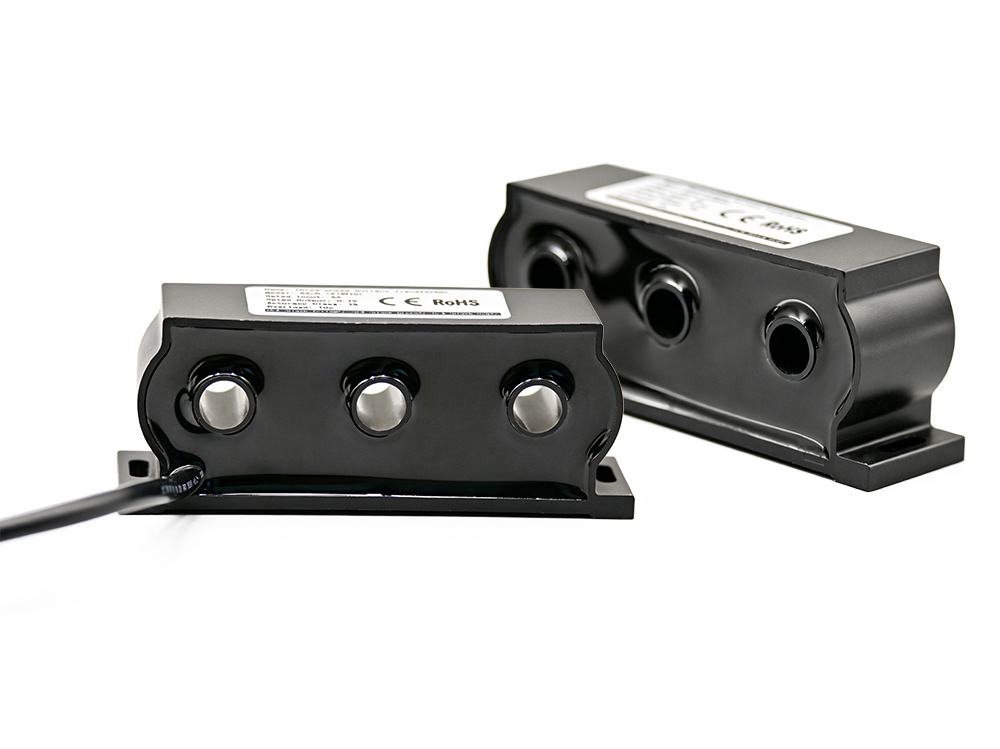
How to Choose the Right Current Transformer for Your Application

Choosing the right current transformer (CT) helps ensure accurate measurement, reliable protection, and safe operation in electrical systems. The best CT for your application depends on more than its current ratio. You’ll also need to consider the installation, accuracy requirements, electrical load, and operating environment.

This guide explains the main factors to consider when selecting a current transformer for industrial monitoring, energy management, and electrical protection.

What Is a Current Transformer?

A current transformer is an instrument transformer that reduces a large primary current to a smaller, proportional secondary current. This allows meters, monitoring equipment, and protective relays to measure current without being directly exposed to the high-current circuit.

For example, a CT with a ratio of 100:5 produces a nominal 5 A secondary current when the primary current is 100 A.

Current transformers are commonly used in:

  • Electrical panels and switchgear
  • Power monitoring and energy management
  • Motor and generator protection
  • Industrial automation
  • Building management systems
  • Utility and substation equipment

1. Determine the Primary Current

Start by identifying the normal operating current and the maximum current the CT may need to measure. The CT’s primary current rating should suit the expected load.

For example, if the circuit normally operates near 80 A, a CT with a 100 A primary rating may be appropriate, depending on overload conditions and the required measurement range. Selecting a rating that is much higher than the actual load can reduce measurement resolution at lower currents.

Also consider temporary overloads, motor starting currents, or other conditions that may cause current to rise above its normal level.

2. Select the Secondary Current

Common CT secondary outputs include 5 A and 1 A for conventional metering and protection systems. Some current sensors and electronic CTs provide a voltage or other low-level output designed for specific monitoring equipment.

Check the input requirements of the connected meter, relay, or controller before choosing a CT. The secondary output must be compatible with the receiving device.

3. Choose the Required Accuracy Class

Accuracy class indicates how closely the CT’s output represents the primary current under specified operating conditions. The appropriate class depends on how the measurement will be used.

  • Energy billing and precision metering: Select a CT that meets the applicable metering requirements.
  • General monitoring: A standard metering accuracy class may be sufficient.
  • Protection: Choose a CT designed for the connected protective relay and expected fault conditions.

Accuracy can vary with current level and connected burden. Review the CT’s specifications across the operating range rather than choosing by accuracy class alone.

4. Check the Burden

Burden is the electrical load connected to the CT’s secondary winding. It includes the input impedance of meters and relays, as well as the resistance of the connecting wires.

The total burden must remain within the CT’s rated burden. Excessive burden can affect measurement accuracy and may prevent the CT from performing as specified.

When estimating burden, account for:

  • The number and type of connected devices
  • Secondary lead length
  • Wire size and resistance
  • Any terminal blocks or additional connections

If several instruments share one CT, confirm that their combined burden is suitable.

5. Match the CT to the Installation

Current transformers are available in different shapes and mounting styles. Choose one that fits the conductor and the available space.

Common options include:

  • Solid-core CTs: Installed over a conductor before it is connected.
  • Split-core CTs: Open to fit around an existing conductor, which can simplify retrofit installation.
  • Bar-type CTs: Designed for use with busbars or specific panel configurations.
  • Window-type CTs: The conductor or busbar passes through the opening.

Check the CT’s window dimensions, mounting arrangement, insulation requirements, and available installation clearance. For existing systems, a split-core CT may be convenient, but the core must close and latch correctly to support the specified performance.

6. Consider the Electrical System

Before selecting a CT, verify that its electrical ratings suit the system. These may include:

  • System voltage and insulation level
  • Frequency
  • Short-time thermal current
  • Dynamic current rating
  • Continuous thermal current
  • Applicable product and installation standards

A CT’s primary current ratio does not by itself define whether it is suitable for a particular electrical system. Confirm the complete rating information for the intended installation.

7. Consider the Operating Environment

Temperature, humidity, vibration, dust, and exposure to chemicals can affect the choice of CT and its enclosure. For outdoor or harsh industrial environments, verify the specified operating temperature and environmental protection requirements.

Also consider how the CT will be installed and maintained. Adequate clearance, secure mounting, and accessible wiring can make commissioning and service easier.

8. Follow CT Safety Requirements

A current transformer’s secondary circuit must be handled according to the manufacturer’s instructions and applicable electrical safety procedures. In particular, an energized CT secondary should not be left open-circuited. An open secondary can produce a hazardous voltage and may damage the CT.

Qualified personnel should install and service CTs, following site procedures and relevant electrical codes.

Common Current Transformer Selection Mistakes

Avoid these common errors when choosing a CT:

  • Selecting a primary rating that is far above the expected operating current
  • Choosing a secondary output that does not match the meter or relay
  • Ignoring connected burden and lead-wire resistance
  • Overlooking accuracy requirements at low current levels
  • Choosing a CT that does not fit the conductor or installation space
  • Failing to check system voltage and short-circuit ratings
  • Leaving the CT secondary open during operation or maintenance

Current Transformer Selection Checklist

Before placing an order, confirm:

  1. Normal and maximum primary current
  2. Required secondary output
  3. Metering or protection purpose
  4. Accuracy class and operating range
  5. Total secondary burden
  6. Conductor or busbar dimensions
  7. Mounting style and available space
  8. System voltage, frequency, and insulation requirements
  9. Environmental conditions
  10. Applicable standards and safety requirements

Find the Right Current Transformer

The right current transformer is one that matches the electrical system, connected equipment, measurement needs, and installation conditions. By checking the current ratio, output, accuracy, burden, mounting style, and ratings together, you can narrow down the options and support dependable measurement.

For help choosing a CT for your application, prepare the primary current range, required output, conductor dimensions, system voltage, and intended use before contacting a supplier. These details make it easier to identify a suitable product.

View More

About Us

Jiangyin Yucheng Electric, Jiangsu, China, makes current sensors and smart meters for global power and industrial applications, offering reliable, high-accuracy, standards-compliant solutions.

Contact Info

No.5 Tongxin Road, Qingyang Town,Jiangsu,China